The global smart home landscape is experiencing a paradigm shift. Traditional toggle and rocker wall switches, which functioned as basic mechanical circuit breakers for over a century, are now complex IoT edge devices. At the heart of this transition is the Smart WiFi Light Switch, which serves as a vital physical-to-digital interface in residential, commercial, and industrial automation networks.
As leading designers and manufacturers based in China, we understand that smart switches represent more than simple remote connectivity. They act as distributed nodes within building management systems (BMS). Their design requires a deep understanding of low-power RF electronics, electromagnetic compatibility (EMC), thermal limits of solid-state relays, and global electrical code compliance. This whitepaper details the engineering principles, market trends, manufacturing standards, and future roadmaps defining the production of premium WiFi light switches in China.
The international market for smart wall controls is expanding rapidly. Industry metrics project the smart switch market size to exceed USD 12.5 Billion by 2030, growing at a CAGR of over 14.2% from 2024. This growth is driven by distinct demands across key sectors:
Modern consumers expect zero-latency control, voice assistant integration, energy tracking, and subtle design aesthetics. Single-wire (no-neutral) technologies allow smart switches to install directly into older homes without rewiring.
Enterprise clients focus on utility reduction and automation. Smart switches connect with occupancy sensors, daylight harvesters, and centralized schedulers, reducing HVAC and lighting energy expenses by up to 30%.
Industrial settings require high-load capabilities and robust interference shielding. High-power WiFi relays control heavy lighting loads in warehouses and manufacturing bays while resisting electromagnetic interference (EMI).
A reliable smart switch requires a precise combination of electrical engineering and RF design. Standard consumer products often suffer from overheating, dropped network connections, or physical button failures. Premium manufacturers address these issues by focusing on three main areas:
Providing power to the internal WiFi microcontroller when the physical switch is "Off" is a key engineering challenge. In a Neutral/Live Wire system, the switch continuously draws power from the neutral line. In a No-Neutral (Single Live Wire) system, the switch must draw a small current through the load to power its MCU. If this standby current is too high, it can cause low-power LED bulbs to flicker or glow. Our designs utilize dynamic current-limiting circuits that keep standby power below 0.2W, preventing bulb flicker without requiring an external bypass capacitor.
Inrush currents from capacitive LED drivers can reach 100 times the normal operating current, which can weld relay contacts together. Our smart switches incorporate zero-crossing detection. The onboard MCU monitors the AC voltage sine wave and triggers the relay precisely at the zero-volt point. This reduces contact arcing, limits electrical noise, and extends the operational life of the relay beyond 100,000 switching cycles.
Wall switch boxes are often enclosed by metal plaster brackets or thick masonry, which degrade wireless signals. We resolve this by using high-gain onboard ceramic antennas combined with low-noise amplifier (LNA) chips. Our WiFi modules (based on the ESP32 and Realtek IoT chipsets) maintain reliable connections even in weak signal environments (-95dBm) while supporting local fallback control if the internet goes down.
Dongguan Luma Bulb Co., Ltd. is committed to the construction of a top-level lighting brand. After years of development, Dongguan Luma Bulb Co., Ltd. has become a professional brand that occupies a distinct place in the lighting industry. The company's technology research and development team is a leading professional team in China.
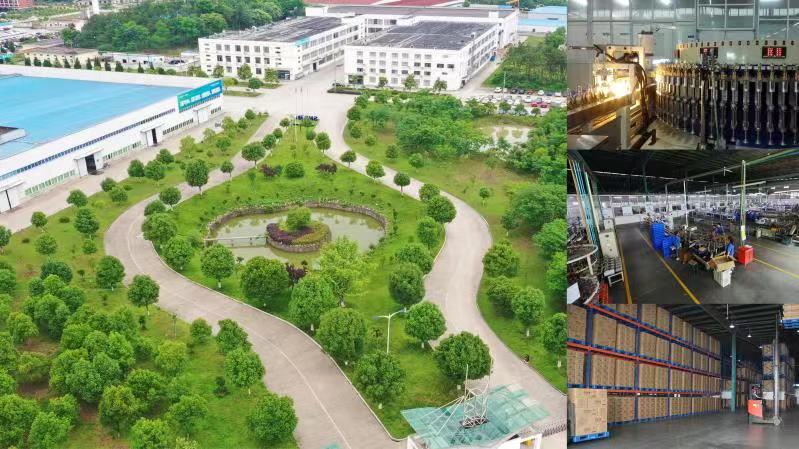
Adhering to our core values of "quality, integrity", technology innovation has become our primary competitive edge. We manage dedicated SMT (Surface Mount Technology) assembly lines, dust-free optoelectronic labs, and automated aging test chambers. Every switch undergoes multi-stage automatic optical inspection (AOI), functional circuit tests, and high-voltage insulation checks.
Dongguan Luma Bulb Co., Ltd. has always adhered to a professional and honest service core, aiming to connect business opportunities through consistent effort. We supply a wide variety of products to support the growing adoption of energy-efficient LED applications and smart home platforms, providing comprehensive commercial and residential lighting solutions.
We focus heavily on global compliance. Our products are certified under CE, RoHS, FCC, and ETL standards, ensuring they meet the safety and RF emission regulations of international markets.
Dongguan Luma Bulb Co., Ltd. is dedicated to helping customers maintain their market advantages, growing together, sharing technical expertise, and leading the transition toward energy-efficient, smart lighting technologies.

The hardware architecture of smart wall switches continues to evolve. Our current R&D efforts focus on several upcoming technologies:
Migrating from traditional proprietary APIs to the Matter protocol. Matter allows smart switches to communicate directly with local networks without cloud routing, lowering latency to under 15ms and ensuring local control if WAN connections fail.
Integrating high-precision metering ICs into our switches. This lets users monitor real-time energy usage, detect connected load degradation, and receive predictive maintenance alerts for failing lighting ballasts.
Developing battery-less, wireless remote switches that run on kinetic energy. By utilizing the physical force of a button press to generate radio signals, these switches eliminate the need for batteries and wiring, simplifying retrofits in historical and commercial buildings.
Enterprise smart home systems require comprehensive integration. We supply complete hardware-software solutions, providing OEMs and system integrators with three main elements:
We offer tailored firmware options supporting MQTT, HTTP, and WebSockets. This simplifies integration with proprietary building automation systems, Tasmota, Espressif-based systems, and custom private cloud servers.
For businesses launching their own brand, we provide white-label Android and iOS apps. These solutions are built on the Tuya SDK and are fully customizable, including tailored user interfaces and custom brand assets.
Our hardware connects reliably with global cloud infrastructures like AWS, Microsoft Azure, and Tuya Cloud. This ensures secure communication, OTA firmware updates, and high server uptime across international markets.
 Luma Bulb