How China’s Advanced Manufacturing Ecosystem is Reshaping Global Commercial and Residential Smart Lighting Architectures
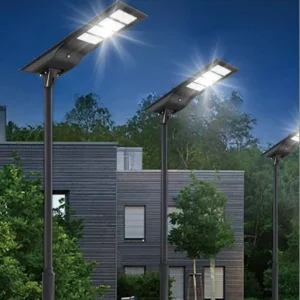
With the globally mandated transition to net-zero carbon goals, passive and active sensor integrations reduce wasted illumination by up to 75% in commercial and industrial settings, accelerating ROI for retrofitting projects.
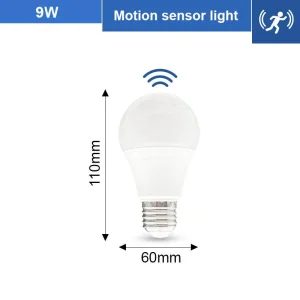
Combining Passive Infrared (PIR) sensing, high-frequency Microwave radar, and Ambient Light Sensors (ALS) ensures zero false-triggers, optimal twilight thresholds, and consistent outdoor operation in extreme climates.
Chinese production clusters, notably in Dongguan, combine chip design, aluminum extrusion, optical lens molding, and automated driver assembly within a 50-kilometer radius, drastically reducing lead times.
Evolving from simple motion detection to predictive spatial intelligence
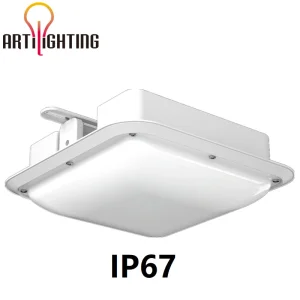
While PIR sensors measure thermal radiation changes and require a direct line of sight, 5.8GHz microwave sensors emit low-power electromagnetic waves and analyze the Doppler echo. This allows microwave sensors to penetrate thin plastic diffusers, glass walls, and drywalls, opening up structural design options for modern architects while maintaining absolute moisture-proof seals (IP65-IP67).
| Feature / Parameter | PIR (Passive Infrared) | Microwave Radar (5.8 GHz) | mmWave Presence Radar (24 GHz) |
|---|---|---|---|
| Detection Principle | Thermal signatures (IR radiation changes) | Doppler shift of reflected radio waves | High frequency micro-Doppler spectrum |
| Detection Range | Medium (up to 8-10m), directional | Long (up to 15m), wide 360° coverage | Ultra-Precise (up to 6m), customizable zones |
| Environmental Resistance | Affected by ambient temp (degrades near 37°C) | Unhindered by temp; affected by heavy vibration | Exceptional stability; ignores wind-blown foliage |
| Penetration | Cannot penetrate glass, wood, or plastics | Can penetrate non-conductive barriers easily | Can target specific zones through thin barriers |
| Primary Application | Residential patios, hallways, basic floodlights | Warehouse high bays, car parks, corridor paths | Smart office workstations, healthcare, luxury retail |
Configuring smart sensor hardware to fit vertical B2B application profiles
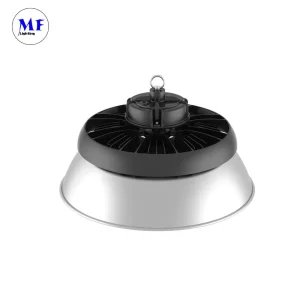
High-bay storage aisles are notoriously inefficient to light continuously. Sensor-enabled high bay LEDs dim to a 10% safety glow in unoccupied zones. When a forklift approaches, the microwave sensors trigger instantaneous 100% illumination, ensuring zero delay in visual adaptation for workers.
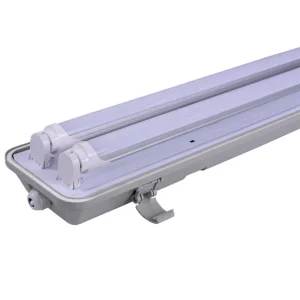
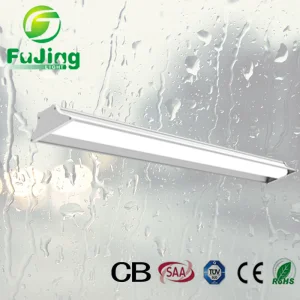
Urban structures use intelligent IP65 vapor-tight linear tri-proof lights linked in groups. If one light detects a vehicle entering the ramp, a signal cascade activates the next five lights in line, providing a safe, well-lit path ahead of the vehicle while keeping energy bills down.
Integrating CCT-tunable (Correlated Color Temperature) and dimmable drivers with occupancy sensors allows properties to leverage circadian rhythm lighting. The space dims during quiet hours and adjusts color temps from cool white to warm amber as the workday concludes.
Why leading global lighting brands concentrate their sourcing operations in southern China
Dongguan Luma Bulb Co., Ltd. is committed to the construction of a top-level lighting brand. After years of development, Dongguan Luma Bulb Co., Ltd. has become a professional brand that occupies a distinct place in the global lighting industry. The company's technology research and development team is a leading professional team in China, pushing the boundaries of integration between LED modules and intelligent detection systems.
Dongguan Luma Bulb Co., Ltd. has always adhered to a professional and honest service core, aiming to connect all business opportunities through unremitting efforts. We supply a wide variety of products to support the growing adoption of energy-efficient LED applications, providing high-reliability commercial and residential lighting solutions. Adhering to our core values of "quality, integrity," technological innovation has become our ultimate competitive edge.
By aligning smart R&D with modern industrial needs, Dongguan Luma Bulb Co., Ltd. helps customers maintain their competitive market advantages, grow together, share technical experience, and remain a pioneer in global LED lighting marketing and engineering.
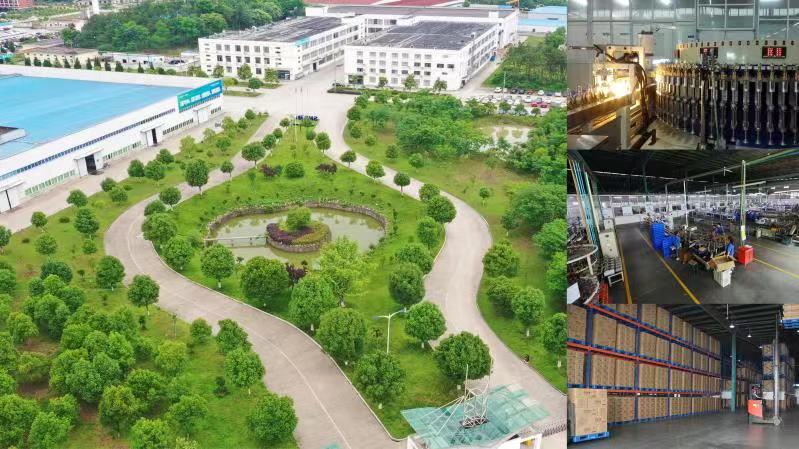

High-speed surface-mount technology (SMT) machines place LED chips and sensor ICs onto PCBs with high precision, maintaining low defect rates (under 50 PPM) and ensuring thermal dissipation stability across solder joints.
From integrating integrating sphere tests to high-temperature aging chambers and IPX6/IPX7 waterproof testing rigs, factories verify that sensor sensitivities and light output curves remain stable under simulated extreme weather profiles.
Modular design approaches allow engineering teams to quickly modify detection angles, hold times, and standby dimming levels on firmware without needing to re-tool structural physical housing components.
Critical indicators for verifying and auditing sensor LED light manufacturers
Verify that LEDs are sourced from Tier-1 suppliers (e.g., Lumileds, Cree, Osram, Epistar) to prevent early color shift (SDCM > 3) and lumen depreciation. Drivers must utilize Japanese or top-tier domestic solid capacitors to withstand continuous thermal loads.
Ask for testing logs documenting sensor performance across high voltage swings and magnetic interference. Electromagnetic compatibility (EMC) testing reports are critical for ensuring that sensor drivers do not interfere with nearby Wi-Fi or medical networks.
LED decay is highly dependent on heat buildup. Heat sinks made from pure 6063 die-cast aluminum, featuring specialized air convective channel structures, dissipate thermal loads, keeping junction temperatures below 85°C.
Ensuring cross-border shipments clear customs and satisfy target market regulations
Products must carry the CE mark, indicating compliance with the Low Voltage Directive (LVD) and Electromagnetic Compatibility (EMC) standards. Compliance with RoHS 2.0 is mandatory to verify the absence of hazardous substances like lead and mercury. Energy labeling under the Eco-Design (ErP) directive verifies standby power draw remains below the mandatory limit of 0.5W.
For insurance and building safety compliance, fixtures must be certified under UL 1598 (Luminaires) or ETL equivalents. Sensor wireless transmission modules must secure FCC Part 15 subpart C clearance for RF emissions. High efficiency ratings listed on the DLC (DesignLights Consortium) QPL (Qualified Products List) are essential for commercial rebate programs.
Top manufacturers provide comprehensive DDP (Delivered Duty Paid) shipping services, localized installation support, and remote technical consultation for smart system commissioning, ensuring seamless delivery and setup worldwide.
Addressing technical and commercial questions from global procurement managers
 Luma Bulb