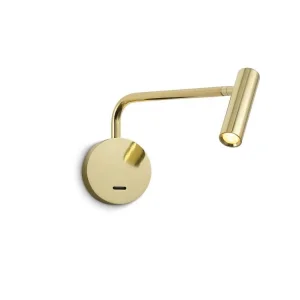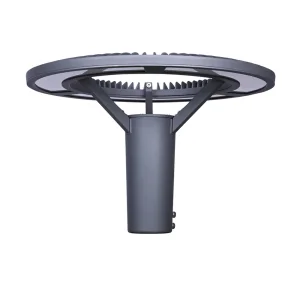
The global solid-state lighting (SSL) market has undergone a structural transformation. No longer constrained to standardized retrofit lamps, modern architectural, commercial, and municipal projects demand bespoke illumination solutions designed around micro-level spatial metrics. As international energy regulations tighten (such as the EU ErP directive and US DLC 5.1 Technical Requirements), the market requires specialized OEM/ODM manufacturing infrastructure capable of tailoring every parameter: from chip-on-board (COB) binning strategies and Total Internal Reflection (TIR) optical efficiency to proprietary thermal management alloys and IoT driver integration.
China has evolved into the world's primary epicenter for advanced optoelectronic engineering. Within this industrial ecosystem, customizable LED fixture factories serve as crucial strategic partners for global lighting specifiers, importers, and original equipment manufacturers. Customization is no longer a premium luxury—it is an engineering imperative driven by complex spatial geometries, human-centric lighting (HCL) protocols, precise color rendering thresholds ($CRI > 97, R9 > 90$), and dynamic environmental ingress ratings (IP65 to IP68).
True industrial customization extends far beyond superficial housing color choices. A tier-1 China customizable LED fixture factory operates across four foundational optoelectronic vectors: Optical, Thermal, Electrical, and Control Systems.
Custom beam angles ranging from $5^\circ$ ultra-narrow pencil beams to $120^\circ \times 60^\circ$ asymmetric street light distributions. Micro-prismatic PMMA lenses, anti-glare louvers (UGR < 16), and custom phosphor mixing for full-spectrum Tunable White (1800K - 6500K) and RGBWW applications.
Advanced heat dissipation using cold-forged 6063 aluminum, high-pressure die-cast ADC12 housings, and solid brass elements for marine/coastal resilience. Thermal conductivity coefficients optimized through Computational Fluid Dynamics (CFD) modeling to keep PN junction temperatures ($T_j$) below $85^\circ\text{C}$.
Full compatibility with modern intelligent protocol stacks: DALI-2 (DT6/DT8), 0-10V, Phase-Cut, DMX512/RDM for complex facade synchronization, as well as wireless standards including Matter, Zigbee 3.0, Bluetooth Mesh, and Tuya Smart ecosystems.
| Specification Variable | Standard Off-the-Shelf Fixture | Customizable OEM Factory Standard |
|---|---|---|
| Color Consistency (SDCM) | MacAdam 5-Step (Noticeable drift) | MacAdam 2-Step to 3-Step (Strict Binning) |
| Driver Surge Protection | 1kV - 2kV Line-to-Line | 10kV - 20kV SPD (Transient Surge Isolation) |
| Enclosure Engineering | Generic Extruded Plastics/Thin Die-Cast | Heavy-Duty Die-Cast ADC12 / Marine Solid Brass |
| Ingress & Impact Rating | IP20 to IP54 Average | IP65 / IP67 / IP68 Fully Encapsulated (IK08-IK10) |
| Color Rendering Index (CRI) | Ra 80 (R9 < 0) | Ra 90 - 98 (R9 > 90, Full Spectrum TM-30-18) |
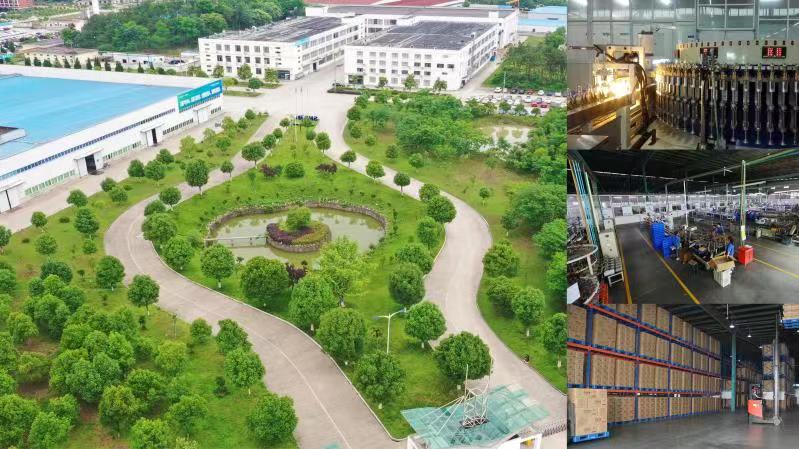
Dongguan Luma Bulb Co., Ltd. is committed to the construction of a top-level lighting brand. After years of development, Dongguan Luma Bulb Co., Ltd. has become a professional brand that occupies a prominent place in the global lighting industry. The company’s technology research and development team is a leading professional team in China, pushing the boundaries of smart control protocols, energy-efficient baseboard luminaires, heavy-duty brass landscape fixtures, and high-lumen solar architectures.
"Dongguan Luma Bulb Co., Ltd. has always been adhering to the professional and honest service core, aiming to connect all business opportunities through unremitting efforts. We supply a wide variety of products to support the growing adoption of energy-efficient LED applications, providing commercial and residential lighting solutions. Adhering to our core values of 'quality, integrity', technology innovation became our core competitive edge."
Dongguan Luma Bulb Co., Ltd. will always help customers maintain their market advantages, grow together, share technical experience, and remain a true pioneer in LED lighting manufacturing and global marketing.
By leveraging specialized production lines, China's manufacturing sector caters to key international sectors requiring strict specification adherence:
Custom hotel lobby chandeliers, dimmable high-CRI downlights, and decorative opal glass pendants. Tailored structural dimensions and architectural finish options (antique brass, brushed nickel, powder-coated matte black).
Integrated 400W–600W solar panel systems equipped with high-capacity LiFePO4 battery banks, MPPT charge controllers, and automated radar motion sensors for continuous operation in IP67 outdoor environments.
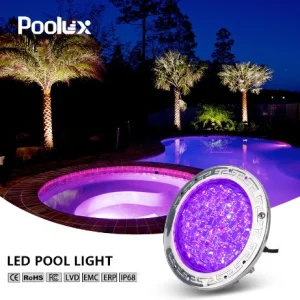
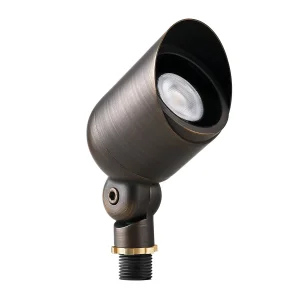
Solid brass MR16 spotlights and 120V pool replacement bulbs engineered with pressure-sealed silicone gaskets and anti-corrosion metallurgies capable of enduring submerged saltwater conditions.
Tuya Wi-Fi, APP-controlled RGBWW ambient bulbs, and linear ceiling/baseboard accent lighting. Engineered with low-flicker drivers to prevent stroboscopic effects during video capture.
The fixture manufacturing landscape is shifting from passive light delivery to dynamic spatial sensing. Customization is migrating toward multi-spectral engine integration and edge-computing smart drivers.
Future customizable fixtures will automatically recalibrate spectral output across the 480nm cyan wavelength region to regulate human circadian rhythms. OEM factories are developing multi-channel drivers that dynamically shift color temperature along the Black Body Locus without sacrificing optical efficiency.
Wireless protocol fragmentation is giving way to standard Matter connectivity. Custom LED fixtures manufactured by top-tier suppliers like Dongguan Luma Bulb Co., Ltd. are incorporating unified chipsets, allowing seamless cross-platform control across Apple HomeKit, Google Home, Amazon Alexa, and enterprise building automation systems.
High-reliability LED fixture manufacturing requires comprehensive verification protocols. Top-tier factories utilize full-spectrum laboratory equipment to ensure each custom batch meets international standards:
Precise measurement of total luminous flux (Lumens), Chromaticity Coordinates (x, y, u, v), Color Temperature (CCT), CRI (Ra, R1-R15), TM-30 metrics, and electrical power factor (PF).
Generation of standard IES/LDT photometric files for lighting designers. Ensures polar light intensity distributions match structural modeling specifications.
Accelerated thermal shock chambers (-40°C to +85°C), salt spray corrosion chambers for coastal brass luminaires, and water ingress test tanks confirming IP65, IP67, and IP68 ratings.


 Luma Bulb