How long do vintage Edison bulbs typically last? The honest answer depends on what “vintage” means. An original-style incandescent bulb usually lasts about 1,000 to 2,000 hours. That equals several months in a busy café, but several years beside a rarely used reading chair.
Modern LED Edison bulbs are different. Their amber glass and spiral filaments imitate early designs, while efficient LED technology may provide 15,000 to 25,000 hours. Still, the printed rating is not a guarantee. Heat, voltage changes, frequent switching, and poor ventilation can shorten real-world performance.
Dr. John Bullough, a respected lighting researcher, explains, “Lamp life is a statistical measure, not a promise for one individual bulb.” That distinction matters. A bulb rated for 2,000 hours can fail earlier, while another may glow far longer. Quality varies.
Look closely at the socket, too. A loose connection can create flickering, dark marks, or unusual heat around the brass base. Those details often reveal installation problems rather than weak manufacturing. Vintage-style incandescent bulbs also lose brightness gradually, and their delicate filaments can break after vibration or repeated movement.
This guide will compare incandescent and LED Edison bulbs, examine their rated lifespans, and explain what affects daily durability. It will also question a common assumption: warmer, more authentic light does not always mean shorter service life. The answer is not perfectly neat. It depends on the bulb, the fixture, and how the light is used.
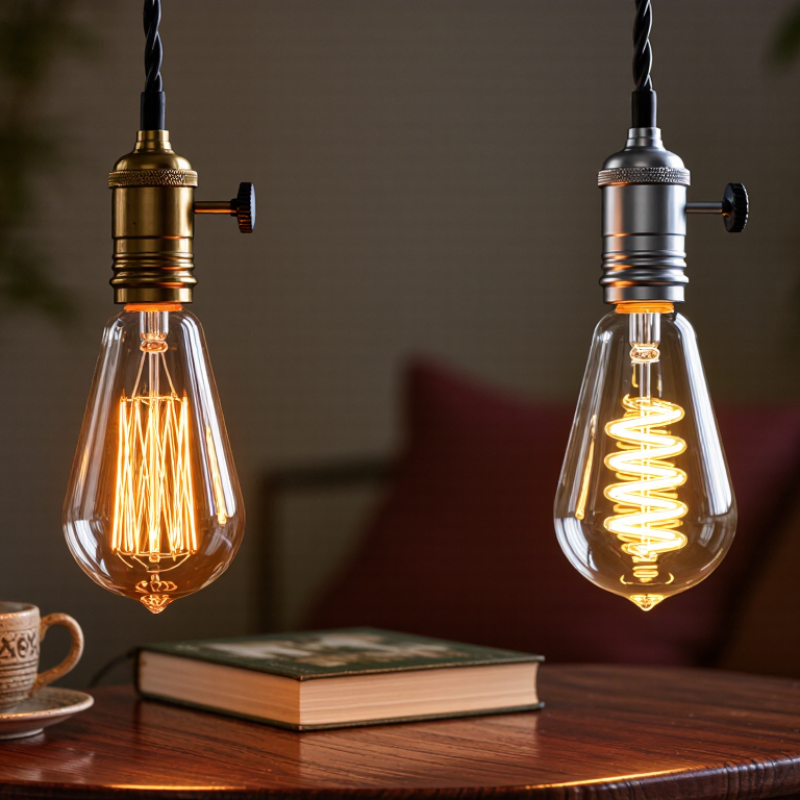
Vintage Edison bulbs are decorative incandescent lamps with exposed filaments and warm, amber-colored glass. Their design imitates early electric bulbs, but many current versions use modern materials. They are not always historically accurate. Some contain carbon filaments, while others use tungsten wire shaped into decorative patterns.
The filament works through resistance. When electricity passes through it, the wire becomes extremely hot and produces light. The glass envelope contains a vacuum or inert gas, which slows filament damage. This process also creates substantial heat. A vintage-style bulb commonly lasts about 1,000 to 3,000 hours, depending on its filament, voltage, and manufacturing quality. Carbon filaments usually glow more softly, but they can be less efficient and more fragile.
Frequent switching can shorten their service life, especially in fixtures with loose sockets or unstable connections. A dimmer may help, but it must be compatible with the bulb and installed correctly. I once assumed a darker glass meant a longer-lasting bulb; that is not reliable. Glass tint changes the appearance, not necessarily the filament’s durability. In practical use, gentle handling and steady voltage matter more. Keep the bulb away from enclosed fixtures unless its instructions permit them, because trapped heat can damage internal components and surrounding materials.
How Long Do Vintage Edison Bulbs Last?
A typical vintage Edison incandescent bulb lasts about 1,000 to 2,000 hours. That equals roughly one year of evening use. Daily use changes the calculation. A bulb glowing four hours nightly may last closer to seven months. Decorative filament designs often sacrifice durability for their warm, amber appearance. Their thin wires can fail sooner than standard household bulbs. The estimate is useful, but never exact.
In practical use, voltage stability strongly affects lifespan. A small voltage increase can make the filament run hotter and fail earlier. Frequent switching also creates thermal stress. Vibrations from doors, fans, or nearby footsteps may shorten its service life. Enclosed fixtures can trap heat around the glass and socket. Keep the bulb upright when possible, and use a compatible dimmer. Check the socket for looseness before installation.
LED filament bulbs with an Edison shape are different. They may operate for 15,000 to 25,000 hours, depending on construction and heat control. They use less electricity, but their light may feel less historically authentic. I have found lifespan claims difficult to compare fairly. Laboratory ratings rarely match dusty kitchens or busy hallways. A realistic choice depends on atmosphere, operating hours, and how often replacement is acceptable. Sometimes, the beautiful bulb is simply the less practical one.
Vintage Edison bulbs often create warm, amber light, but their operating life depends on more than appearance. Traditional incandescent filament bulbs usually last about 1,000 hours, according to the U.S. Department of Energy’s lighting guidance. Decorative versions may last between 1,000 and 2,000 hours, depending on their filament design and rated voltage. LED filament versions can reach 15,000 to 25,000 hours, consistent with ENERGY STAR performance requirements.
Heat is a major factor. An enclosed glass shade can trap warmth around the bulb, weakening the filament or shortening electronic component life. Frequent switching also causes stress during startup. Voltage matters too. A bulb designed for 120 volts may age quickly on a circuit with repeated voltage spikes. Poor ventilation, loose sockets, vibration, and unsuitable dimmers create additional risks. Small details matter.
Tips: Check the bulb’s rated hours before buying. Use a compatible dimmer and avoid sealed fixtures unless approved. Keep the socket dry and firmly connected. For incandescent bulbs, gentle handling is essential because the hot filament is fragile. LED filament bulbs usually last longer, but their drivers can still fail early in excessive heat. I would not treat the advertised lifespan as a promise; laboratory ratings rarely match every home. Track operating hours and inspect darkening glass, flickering, or uneven brightness before failure.
How Long Do Vintage Edison Bulbs Last?
Vintage Edison bulbs usually use incandescent filaments, which create warm light but consume more energy. The U.S. Department of Energy estimates that standard incandescent lamps last about 1,000 hours. That equals roughly one year with three hours of daily use. Decorative LED filament bulbs can often reach 15,000 hours or more, according to ENERGY STAR qualification data. Appearance alone does not reveal the technology inside.
Watch for repeated flickering, delayed lighting, or sudden brightness changes. A dark patch near the glass neck often signals a worn filament. Blackening across the envelope is another strong warning. Replace the bulb when the filament visibly sags or breaks. Do not ignore buzzing, excessive heat, or a loose base. These symptoms may involve the socket or dimmer, not only the bulb.
The difficult part is diagnosis. A dimmer mismatch can imitate bulb failure. Try the bulb in a compatible fixture before discarding it. If flickering follows the bulb, replacement is sensible. If the fixture flickers with several bulbs, stop using it and request a qualified electrical inspection. The Illuminating Engineering Society notes that switching cycles, heat, and vibration affect incandescent life. Therefore, a bulb used above a kitchen island may fail earlier than its rated figure. Ratings are useful, but real rooms are less predictable.
How Long Do Vintage Edison Bulbs Last?
Ways to Extend the Life of a Vintage Edison Bulb
A vintage Edison bulb often lasts between 1,000 and 3,000 hours. Its actual life depends on voltage, filament design, heat, and switching habits. Lower-voltage operation can reduce filament stress, but the bulb must remain compatible with the fixture. Never guess with electrical ratings.
Handle the bulb gently. The thin filament can suffer from vibration, especially in pendant lights or ceiling fans. Turn the power off before touching the socket, and let the glass cool completely. I use a dry microfiber cloth to remove dust from the bulb. Moisture and cleaning sprays should stay away from the socket.
Heat is a quiet enemy. Keep the bulb away from enclosed shades unless the fixture allows incandescent use. Leave space around the glass, and check for darkening near the base. A compatible dimmer may reduce heat and brightness, but poor compatibility can cause buzzing or flickering. That flicker matters.
Frequent switching also affects incandescent filaments. Use the bulb where longer operating periods make sense, rather than turning it on for seconds repeatedly. A loose socket can create uneven contact and extra heat, so inspect it when the light flickers. I once blamed an old bulb for repeated failures. The real problem was a worn socket. That mistake changed my maintenance routine.
| Bulb Type or Factor | Typical Rated Life | Approximate Life at 3 Hours/Day | Main Cause of Wear | Practical Recommendation |
|---|---|---|---|---|
| Traditional incandescent Edison-style bulb | About 1,000–2,000 hours | Approximately 11 months–1.8 years | Repeated heating and cooling of the filament | Use only when needed and avoid frequent rapid switching. |
| Low-wattage decorative incandescent bulb | About 1,500–3,000 hours | Approximately 1.4–2.7 years | A delicate filament and heat accumulation | Provide ventilation and keep the bulb within its specified wattage. |
| Vintage-style LED filament bulb | About 15,000–25,000 hours | Approximately 13.7–22.8 years | Electronic-driver aging and excessive heat | Choose a compatible dimmer and keep the driver properly ventilated. |
| Use for 1 hour per day | Depends on bulb construction | A 2,000-hour bulb may last about 5.5 years | Total operating time | Use timers or switches to prevent unnecessary operating hours. |
| Use for 6 hours per day | Depends on bulb construction | A 2,000-hour bulb may last about 11 months | Longer periods at high operating temperature | Select a longer-life bulb or replace it with a vintage-style LED alternative. |
| Excessive voltage | Can substantially reduce rated life | May fail much earlier than expected | Higher filament temperature and faster evaporation | Use the correct voltage rating and have unstable household voltage checked. |
| Vibration or physical impact | Potentially shorter than rated life | Highly variable | Filament or internal connections can break | Avoid ceiling fans, vibrating fixtures, and rough handling while installing. |
| Enclosed or poorly ventilated fixture | Often shorter than rated life | Depends on fixture temperature | Heat damages filaments, seals, or electronic components | Use only bulbs approved for enclosed fixtures and keep air vents clear. |
| Incompatible dimmer | May reduce life or cause flicker | Variable | Electrical stress, buzzing, and unstable current | Match the dimmer to the bulb type and avoid operating below its supported range. |
| Careful installation | Helps preserve the rated life | Depends on daily use | Over-tightening or touching hot glass can damage components | Switch off power, allow the bulb to cool, hold the base, and tighten gently. |
Note: Actual service life varies with voltage, fixture design, operating temperature, vibration, dimming equipment, and daily usage. The year estimates are calculated by dividing rated hours by average operating hours per day and should be treated as approximate.
They are decorative incandescent bulbs with exposed filaments and warm, amber-colored glass. Their appearance imitates early electric lighting. Modern versions are not always historically accurate.
Electricity passes through a thin wire. Resistance makes the filament extremely hot. The glowing wire produces light and considerable heat.
Most incandescent versions last about 1,000 to 2,000 hours. Four hours of nightly use may equal roughly seven months. The estimate is not exact.
Unstable voltage can overheat the filament. Frequent switching creates thermal stress. Vibrations from doors, fans, or footsteps may also cause earlier failure.
Only use them in enclosed fixtures when the instructions allow it. Trapped heat can damage the bulb, socket, or nearby materials. Heat matters.
Watch for flickering, delayed lighting, or sudden brightness changes. Dark patches near the glass neck may indicate filament wear. A sagging or broken filament requires replacement.
A compatible dimmer may help reduce stress during operation. Incorrect matching can cause flickering or premature failure. Installation should be done properly.
LED filament versions may last 15,000 to 25,000 hours. They use less electricity but may look less historically authentic. Sometimes beauty is less practical.
Test the bulb in a compatible fixture. If the flickering follows the bulb, replacement is reasonable. If several bulbs flicker, stop using the fixture and seek qualified electrical inspection.
No. Glass tint mainly changes the appearance of the light. I once assumed darker glass improved durability. That assumption was unreliable.
Vintage Edison bulbs are decorative incandescent lights designed to showcase a warm glow and visible filament, creating a nostalgic atmosphere. They work by sending electricity through a thin wire inside a glass bulb, which heats up and produces light. How long do vintage Edison bulbs typically last? In general, they may operate for about 1,000 to 3,000 hours, depending on their construction, usage, and operating conditions. Their lifespan is often shorter than that of modern energy-efficient bulbs because the filament is delicate and exposed to repeated heating and cooling.
Frequent switching, unstable voltage, excessive heat, vibration, and poor ventilation can reduce operating life. Signs that a bulb needs replacement include noticeable flickering, a much dimmer glow, darkening inside the glass, or a filament that has broken. To extend its life, use the correct fixture and voltage, avoid touching the glass with bare hands, provide adequate ventilation, minimize unnecessary on-and-off cycles, and handle the bulb gently during installation and cleaning.
Luma Bulb