Why Choose the Right Lighting Fixtures for Small Rooms?

Time:2026-11-07 Author:Charlotte
0%

Small rooms can feel welcoming, but poor lighting can make them seem cramped, flat, or oddly shadowed. A bulky pendant may dominate a low ceiling, while one dim ceiling light leaves corners dull. Good lighting does more than brighten a space. It guides the eye, supports everyday tasks, and helps pale walls feel less boxed in. Yet more fixtures do not always mean better results. Glare, exposed bulbs, and tangled cords can make a compact room feel busy. In many small-room layouts, even a well-placed lamp can cast an unexpected shadow across a desk or doorway. Small changes matter. Not always in obvious ways.

How to choose the right lighting fixtures for small rooms? Start with the room’s dimensions, ceiling height, window direction, and everyday activities. A flush mount can preserve headroom; a slim wall sconce can free a crowded bedside table. Layer light where possible: use ambient lighting for the whole room, task lighting for reading or cooking, and a softer accent near shelves. Choose brightness and color temperature to suit each task, and check the bulb and fixture specifications rather than judging by appearance alone. Dimmers can help, but compatibility matters. Fixture size, shade direction, and glare deserve equal attention. There is no universal formula. Even careful planning can miss how light falls on real surfaces, so a small adjustment may be needed after installation. This guide explores practical choices, common trade-offs, and details worth checking before buying.
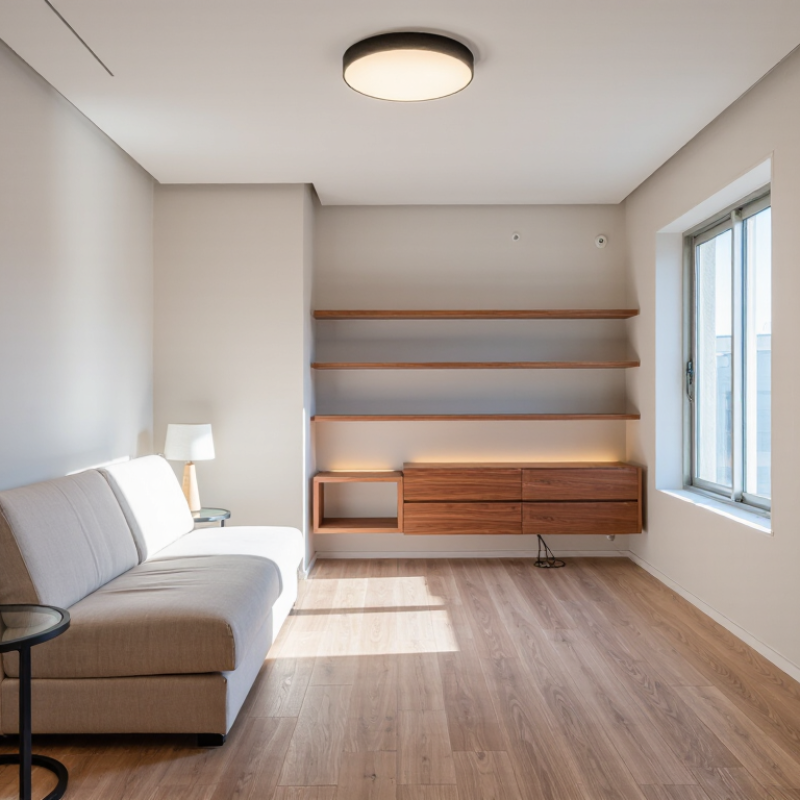
Why Choose the Right Lighting Fixtures for Small Rooms?

How Room Size and Layout Shape Lighting Needs

In a small room, floor area matters, but the layout determines where light is actually useful. A central ceiling fixture may leave a desk dim or cast shadows beside a wardrobe. Map the room before choosing fixtures: note window direction, door swings, furniture height, and the spots where reading or dressing happens. A compact ceiling light can provide general illumination, while a shaded wall fixture or adjustable task lamp adds light exactly where needed. Keep clear walkways; a floor lamp can steal valuable space.

Light the room’s vertical surfaces, too. Aiming some light toward a pale wall can make a narrow space feel less enclosed, while a bright bare bulb near eye level may feel harsh. Small rooms do not always need brighter bulbs; they often need better placement and separate controls. It is easy to overlook the desk corner. Then the room feels bright, yet the task still strains your eyes.

Energy use is another practical consideration. The U.S. Department of Energy’s Energy Saver guidance reports that LEDs use at least 75% less energy and last up to 25 times longer than incandescent lamps. That makes efficient bulbs useful for fixtures used each evening. Still, lumens, shade design, and mounting height affect comfort, so test a lamp in the actual room before committing. A quick trial can reveal a glare problem you missed on paper.

Which Fixture Types Suit Small Rooms

Which Fixture Types Suit Small Rooms

Small rooms usually need light without visual clutter. A low-profile flush mount works well in a bedroom or narrow entry because it keeps the ceiling line clear. In a kitchen, slim recessed lights can spread illumination across counters, but too many may make the ceiling feel busy.

Aim them at work surfaces, not just the floor.

Wall sconces free up bedside tables and create useful pools of light beside a mirror or reading chair. Choose shaded or adjustable models to reduce glare at eye level. A compact desk lamp is better for focused tasks than making one bright ceiling fixture do everything.

Keep the ceiling clear. A caveat: directional lights can leave corners dim if they are spaced poorly.

Choose efficient LED fixtures, especially where lights stay on for long periods. The U.S. Department of Energy’s Energy Saver guidance says LEDs use at least 75% less energy and last up to 25 times longer than incandescent lamps.

For flexibility, fixtures with replaceable bulbs can be easier to maintain than sealed units. Small, but not dim. I still find that scale is easy to misjudge: a fixture that looks modest in a showroom can dominate a tiny room, so check its dimensions against the actual ceiling and furniture.

How Fixture Scale and Placement Affect Space

In a small room, a fixture’s size changes how the whole space feels. A wide pendant can make a low ceiling seem lower, while a tiny ceiling light may leave the corners dim. Measure the room and note ceiling height before choosing. For example, a compact flush mount often suits a narrow hallway better than a deep hanging shade. Still, a very small fixture can look lost above a dining table.

Placement matters just as much. A ceiling light centered in the room may brighten the floor but leave a reading chair in shadow. Add a wall sconce beside the chair or a table lamp near the sofa to bring light closer to where it is used. Keep walking paths clear, and check that hanging fixtures do not sit at eye level or interrupt a doorway. Small shifts make a difference.

Layered lighting helps reduce harsh contrast. Pair a general ceiling fixture with focused task lighting, then use a shaded lamp for softer evening light. Choose shades that direct light where needed without blocking too much of it. Test the arrangement after dark; daylight can hide uneven coverage. I have found that even careful measuring misses something sometimes: a fixture may feel larger once installed. Temporary paper cutouts on the wall or ceiling can help preview its scale before drilling.

How Light Color and Brightness Change Room Perception

In a small room, brightness is not just about choosing the highest-lumen bulb. It depends on where light lands. The Illuminating Engineering Society’s recommended illuminance tables place many reading and writing tasks around 300–500 lux at the work surface. That is a useful reference, not a target for every corner. A desk lamp can brighten a book while leaving the ceiling dim; the room may then feel smaller. Layered light helps: use a soft ceiling fixture, then add a focused lamp near a chair or desk. Check the actual surface at night, because daylight can disguise weak lighting.

Color temperature changes the mood as well as the apparent clarity of a room. Warm light, around 2700–3000 K, often makes pale walls feel softer; neutral light can make edges and colors easier to distinguish. Neither choice magically adds floor space. For a narrow room, aim light toward walls or the ceiling so illumination spreads beyond one central pool. Keep brightness adjustable if possible. A little flexibility matters. The U.S. Department of Energy’s Energy Saver guidance says LEDs use at least 75% less energy than incandescent lighting, making longer evening use more practical. Still, more light is not always better; glare on a glossy desk can make a small room feel harsher, and that is easy to overlook.

What to Consider When Choosing Small-Room Fixtures

In a small room, choose a fixture that fits the ceiling height and leaves clear sightlines. A broad, shallow flush mount can spread light without crowding the room visually. Check the fixture’s actual dimensions, not just its product photo. Scale matters. A pendant that looks modest online may hang too low above a narrow table.

Think about the light’s purpose, not only its appearance. The U.S. Department of Energy reports that LEDs use at least 75% less energy and last up to 25 times longer than incandescent bulbs. Check lumens for brightness, and confirm that bulbs work with the chosen dimmer. A dimmer can make one ceiling light serve both cleaning and quiet evenings. But compatibility matters; some combinations flicker.

Small rooms often need more than one light source. Pair a ceiling fixture with a wall sconce or a slim desk lamp to reduce harsh shadows on faces and work surfaces. Choose a shade that directs light where you need it, while avoiding bare bulbs at eye level. Color temperature affects the room’s feel: warm light can soften a bedroom, while neutral light may suit a workspace. I still find this easy to misjudge. Test the bulb in the room before buying several.

Why Choose the Right Lighting Fixtures for Small Rooms?

Beam angle affects how widely a fixture spreads light. The chart shows the idealized circular footprint of four beam angles at a mounting height of 2.4 m.

Footprint areas are calculated geometrically using a circular beam and the stated mounting height; they are not measured light levels or guaranteed real-world coverage. In a small room, consider beam spread alongside brightness, ceiling height, and the location of task areas.

FAQS

Which ceiling fixture works well in a small bedroom?

A low-profile flush mount keeps the ceiling line clear. Check its width against the bed and room dimensions.

Are recessed lights a good choice for a small kitchen?

Slim recessed lights can brighten counters without taking up visual space. Aim them at work surfaces, and avoid crowding the ceiling.

How can I add light beside a reading chair?

Place an adjustable wall sconce or a compact table lamp nearby. A ceiling light alone may leave the chair in shadow.

How do I prevent glare from wall sconces?

Choose shaded or adjustable fixtures, especially near mirrors and seating. Test the light at eye level.

What should I consider before choosing a pendant?

Measure the ceiling height and check how far the pendant hangs. A wide fixture can make a low ceiling feel lower.

How can layered lighting make a small room more comfortable?

Pair a general ceiling light with task lighting and a shaded lamp. This gives you softer evening light and focused brightness.

How can I check a fixture’s size before installation?

Cut a paper shape matching its dimensions and tape it to the ceiling or wall. It may look different once installed.

How can I avoid dark corners?

Check the room after dark and look beyond the floor. Poorly spaced directional lights can leave corners dim. I still misjudge scale sometimes.

Conclusion

Choosing the right lighting for a small room starts with understanding its size, layout, and purpose. A compact ceiling fixture can provide useful general light without taking up floor or wall space, while wall lights, recessed fixtures, or adjustable lamps can brighten specific areas. The best choice depends on where light is needed, how furniture is arranged, and whether a fixture might obstruct movement or sightlines.

Scale and placement also shape how spacious a room feels: oversized fixtures can crowd a compact space, while carefully positioned lights can draw attention to useful areas and reduce dark corners. Light color and brightness matter, too. A balanced, comfortable glow can make the room feel inviting, while layered lighting offers flexibility for different activities. When considering How to choose the right lighting fixtures for small rooms?, compare fixture size, light direction, brightness, color, energy use, and ease of installation with the room’s needs.

Charlotte

Charlotte

Charlotte is a seasoned marketing professional with a deep understanding of the company's portfolio and a passion for elevating its presence in the market. With a keen eye for detail and a commitment to excellence, she ensures that our professional blog is regularly updated with insightful articles......