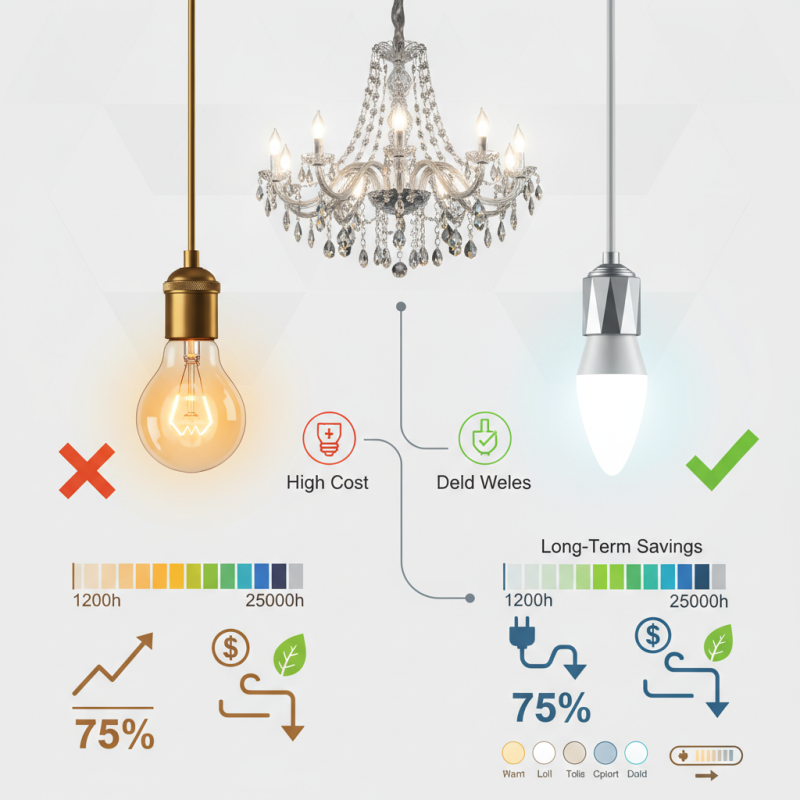
Choosing the right LED bulbs for chandeliers can enhance both style and efficiency. According to the U.S. Department of Energy, LED bulbs consume up to 75% less energy than traditional incandescent bulbs. This significant reduction in power usage appeals to eco-conscious consumers. Moreover, LEDs have an impressive lifespan, lasting up to 25,000 hours compared to the 1,200 hours typical of incandescent bulbs.
What are the benefits of using LED bulbs in chandeliers? They offer not just energy savings but also a wide range of color temperatures and fixtures. This versatility allows you to create unique atmospheres in any room. However, it’s essential to consider the initial costs of LED bulbs, which can be higher than traditional options. This potential drawback might make some hesitate.
Moreover, dimming compatibility is a crucial factor in chandeliers, as not all LED bulbs work well with dimmers. As the market evolves, it's vital to research available options. Exploring different brands and specifications could lead to better choices. Ultimately, selecting the right LED bulbs can amplify a chandelier's beauty while providing long-term benefits.
Understanding the Different Types of LED Bulbs for Chandeliers
When selecting LED bulbs for chandeliers, understanding the options available is essential. LED bulbs come in various shapes, sizes, and color temperatures. Popular choices include candelabra, globe, and reflector bulbs. Each type serves different aesthetic purposes. Little details matter, like the glow these bulbs emit. For instance, warm white lights can create a cozy ambiance, while cool white options offer a modern feel.
Consider the wattage and brightness when making a choice. Higher lumens mean brighter lights, but not all bulbs are equally effective. The chandelier design could also influence your decision. Longer necks or wider bases may not accommodate all LED styles. Reflecting on these factors can lead to delightful outcomes, but mistakes may also happen. Choosing the wrong color temperature could clash with your decor.
Lastly, dimmability is another significant factor. Some LED bulbs work well with dimmer switches, while others do not. This could restrict lighting options. Testing different bulbs in your chandelier can help. It may take a few tries to find the right match. Embrace the process, and remember that lighting affects mood significantly. Reflecting on your choices can lead to a more satisfying selection.
Key Factors to Consider When Choosing LED Bulbs
When choosing LED bulbs for chandeliers, several key factors must be considered to optimize both aesthetics and efficiency.
Brightness is crucial. Aim for bulbs offering at least 800 lumens for effective illumination. The color temperature also matters.
Many prefer a warm white light between 2700K and 3000K, creating a cozy atmosphere.
However, some may find this too yellow. Experimentation might be necessary to find the perfect match for your space.
Wattage equivalence is an important detail too. Look for LEDs that match traditional incandescent bulb outputs.
For instance, a 10-12 watt LED can replace a 60-watt incandescent. This not only saves energy but reduces heating.
According to a report from the U.S. Department of Energy, switching to LEDs can save up to 75% in energy costs over time.
Yet, the upfront cost can be a deterrent for some.
Balancing budget with long-term savings can require reflection.
Additionally, consider the bulb's lifespan. Many LEDs last up to 25,000 hours, compared to 1,000 hours for incandescents.
This longevity is appealing, but if you change your décor frequently, you might need to adapt to new styles.
Don’t hesitate to mix different bulb types in your chandelier. This can create visual interest, but be cautious;
the lighting effects might not blend seamlessly.
Evaluating Brightness and Color Temperature for Ambiance
Choosing the right LED bulbs for chandeliers involves careful consideration of brightness and color temperature. Brightness is measured in lumens. Most chandeliers need around 800 lumens per bulb for adequate illumination. This amount ensures the light is bright enough without being overpowering. Too few lumens can create a dim atmosphere, while too many might lead to a harsh glare.
Color temperature, measured in Kelvin, also plays a crucial role. For a warm ambiance, bulbs in the range of 2700K to 3000K are ideal. This temperature mimics the soft glow of traditional incandescent bulbs, creating a cozy atmosphere. In contrast, cooler temperatures around 4000K are better for task lighting. Industry reports suggest that around 62% of homeowners prefer warm tones for living spaces. The choice should reflect the intended mood of the room.
Consider the chandelier's design and the overall decor. A modern chandelier might benefit from cooler lights, while classic designs often shine brighter with warmer hues. Experimenting with different combinations may yield unexpected results, transforming the entire feel of a space. It's about finding balance and personal preference, sometimes requiring thoughtful adjustments.
Comparing Energy Efficiency and Lifespan of LED Bulbs
When selecting LED bulbs for chandeliers, energy efficiency is a key factor. LED bulbs consume significantly less energy compared to traditional incandescent bulbs. They convert about 80-90% of their energy into light. This characteristic results in lower electricity bills.
Additionally, the lifespan of LED bulbs is remarkable. On average, they last 15,000 to 25,000 hours. In contrast, incandescent bulbs typically last around 1,000 hours. This longevity reduces the need for frequent replacements. However, some may argue that LED bulbs can be more expensive initially. It’s a trade-off: higher upfront costs versus long-term savings.
Light quality is another consideration. LED bulbs come in various color temperatures. Some mimic the warm glow of traditional bulbs, while others offer a cooler light. The choice can impact the ambiance. Remember, picking the right LED bulb is a balance. Look closely at energy efficiency, lifespan, and light quality. Each chandelier may have different needs. Don’t rush into a decision. Explore options to find the perfect fit.
How to Choose LED Bulbs for Chandeliers and Their Benefits? - Comparing Energy Efficiency and Lifespan of LED Bulbs
| Bulb Type |
Wattage |
Lumens Output |
Energy Efficiency (lm/W) |
Lifespan (hours) |
Color Temperature (K) |
| Standard LED Bulb |
10W |
800 lm |
80 lm/W |
25000 hours |
3000K |
| Dimmable LED Bulb |
9W |
800 lm |
89 lm/W |
30000 hours |
2700K |
| Candle LED Bulb |
5W |
400 lm |
80 lm/W |
25000 hours |
3000K |
| Globe LED Bulb |
15W |
1600 lm |
107 lm/W |
25000 hours |
4000K |
| Vintage LED Bulb |
6W |
500 lm |
83 lm/W |
20000 hours |
2200K |
Exploring the Benefits of LED Bulbs for Chandeliers
LED bulbs are now a popular choice for chandeliers. Their energy efficiency is a key advantage. According to the U.S. Department of Energy, LED bulbs use at least 75% less energy than traditional incandescent bulbs. This means lower electricity bills and reduced carbon footprints for households.
LEDs also have a longer lifespan. They last up to 25,000 hours compared to 1,000 hours for incandescent bulbs. However, this can create a paradox: people may forget that LED bulbs should still be replaced after years of usage. A beautiful chandelier can lose its charm with flickering or dim bulbs.
Lighting quality is another plus. LED bulbs offer different color temperatures, from warm to cool light, enhancing any room's aesthetic. Yet, it's important to ensure proper dimming compatibility. Some LEDs may not work well with existing dimmer switches, leading to frustrations. Selecting the right LED bulb requires considering both appearance and function for your chandelier.
FAQS
: Common choices are candelabra, globe, and reflector bulbs. Each serves a different aesthetic purpose and glow.
Warm white lights create a cozy feel, while cool white lights offer a more modern ambiance. Experiment to find your preference.
Aim for at least 800 lumens for effective illumination in your chandelier.
Match LED wattage to traditional bulbs. For example, a 10-12 watt LED replaces a 60-watt incandescent, saving energy.
Many LEDs last up to 25,000 hours, far surpassing the life of incandescent bulbs. This can change replacement frequency.
Yes, mixing can create visual interest but may lead to uneven lighting. Consider potential mismatches in lighting effects.
Choosing the wrong color can disrupt the overall look. Reflect on your choices to avoid clashing errors.
Not all bulbs work with dimmer switches. Testing different bulbs is advisable to find compatible options for your setup.
While they can be pricey initially, energy savings over time may justify the expense. Reflect on budget versus long-term benefits.
Lighting has a significant effect on mood. Take time to experiment with different styles for the best emotional impact.
Conclusion
Choosing the right LED bulbs for chandeliers involves understanding the different types available and key factors to consider, such as brightness and color temperature, which contribute to the ambiance of a space. It's essential to evaluate these factors to create the desired atmosphere while also considering energy efficiency and the lifespan of the bulbs.
What are the benefits of using LED bulbs in chandeliers? LED bulbs are known for their energy efficiency, reducing electricity costs over time, and their long lifespan, which minimizes the need for frequent replacements. Additionally, they offer a range of color temperatures that can enhance the aesthetic appeal of a chandelier, making them a practical and stylish choice for lighting solutions in any home.

 Luma Bulb